28 February 2015

Post 176: 'JACKSON STOMP' - ELEVEN BARS!

Here's something surprising - a tune comprising ELEVEN bars (measures).

I am acquainted with perhaps a thousand tunes played by traditional jazz bands, but virtually all the tunes contain multiples of four bars. Most common are the 12-bar blues and 32-bar standards.

In all those hundreds of tunes, the only one made up of eleven bars is Jackson Stomp
Yes. Jackson Stomp really has eleven bars. When I first noticed this, I could not believe my ears. Had I miscounted? I checked and re-checked.

It felt like a 12-bar blues but sure enough it really was complete after 11 bars.

I found out that it originated with Cow Cow Blues, written and recorded in 1928 by Cow Cow Davenport. You can hear this on You Tube. In this form, it was a standard 12-bar, played in boogie woogie style.

But the tune was taken up by Charles McCoy ('Papa Charlie'), who lived from 1909 to 1950. He slightly adapted it into Jackson Stomp and recorded it with his colleague Bo Carter in The Mississippi Mud Steppers. It was at this point that it became the tune of eleven bars.
They also recorded it again (this time eleven bars with lyrics) as  The Lonesome Train That Carried My Girl Away.

Now how is it possible for an 11-bar tune to sound right? What is the trick?

I'm not sure that I have the answer, but let me try.

Taking the chords of a 12-bar as (at their most basic):

I   I   I   I   IV   IV   I   I   V   V   I   I

we find that Jackson Stomp IS essentially a 12-bar, but with the clever twist of omitting Bar 8. 

I   I   I   I   IV   IV   I   V  V   I   I

To hear Jackson Stomp pleasantly played by a modern Jug Band, try this video:

http://www.youtube.com/watch?v=76OP2FVRvt0

or watch the great Tuba Skinny play it:

http://www.youtube.com/watch?v=rGuLZfMqIoc

Tuba Skinny play it in Bb. (That means C for the Bb trumpet.) I worked it out for inclusion in my mini-filofax for my trumpet and now I have a go at playing it from time to time.


And here's another curiosity - the only 13-BAR blues I can think of. It occurs as the Interlude in Blind Boy Fuller's Untrue Blues. This is essentially an eight-bar tune, but he has two guitar links of 13 bars, which seemed to be based on the 12-bar blues, but with Bar 10 repeated. When Tuba Skinny revived this tune in 2014, they scrupulously followed the original and kept the 13-bar section.

==================
FOOTNOTE
The book Playing Traditional Jazz by Pops Coffee is available from Amazon.

24 February 2015

Post 175: 'TRICKS AIN'T WALKIN' NO MORE'

Lucille Bogan
One thing that appeals to me about Tricks Ain't Walking No More is that is feels like a standard 12-bar blues and yet it is actually 16 bars (there's a kind of 4-bar tag). Here's how it sounds to me:


This blues was first recorded in 1930 by Lucille Bogan (better known later as Bessie Jackson) and it seems that she was also the composer.

As with so many tunes I have tried to learn recently, I first heard it on one of the CDs made by that stunningly-good young band Tuba Skinny.

You can see them performing it at:


Erika Lewis's wonderful soulful voice is just right for the song.

It was written during the Great Depression and its slang terms would have been immediately understood, heartfelt and meaningful. I'll leave you to work out what kind of people 'tricks' were.

21 February 2015

Post 174: JAZZ ON THE CANAL


Boats coming down a hill!
Here you can see three - perhaps four - of the ten locks.
Jazz Band emerging from a lock.
For five years in succession, my friend Ralph Hunt, the composer and banjo player, took his narrowboat through the famous descent of the ten Foxton Locks on the Grand Union Canal, here in the Midlands of England. Every time, we had a four-piece traditional jazz band playing on the boat. 
We performed as we descended through the locks, playing such tunes as Canal Street Blues, On a Slow Boat to ChinaUp a Lazy River and Down By The Riverside. The descent took about an hour.
A great crew of volunteer helpers, including Ralph's wife Anne, did all the really hard work, such as opening and closing the lock gates.
Ralph and Anne
After that, we played When The Saints Go Marching In while crossing the famous Bridge 62 (The Rainbow Bridge).
Then we gave a short concert outside the Bridge 61 Pub including Basin Street Blues by the ‘Basin’ at the foot of the locks.
Our programme included a brand-new tune that Ralph specially composed for the occasion. It is called The Foxton Rag. It is a pretty little piece that incorporates three themes and two key changes. It was a joy to play.
Every year, the Foxton event attracted hundreds of people. It was a fun occasion and we always seemed to have good weather.
In the pub.
There was for me the extra delightful surprise one year that my brother and his wife suddenly appeared: they had driven 100 miles from London just to support the event and to enjoy a brief get-together over a beer!

And I send a special word of thanks also to those of you who came along to support us. Someone once made a VERY short video of us:
Click here to view.
Canals are fine places to have a rehearsal or give a jazz concert. I recommend them.

19 February 2015

Post 173: USE THOSE 6THS AND 9THS

Introducing flattened thirds and sevenths adds colour and excitement to a tune; but it's also interesting to throw sixths and ninths into your improvisations.

Listen to a great creative player such as Shaye Cohn and note how frequently she gives a lot of emphasis to 6ths and 9ths - especially at the start of one of the final choruses, when she is still finding fresh approaches. For example, a tune may begin with two bars firmly on the C major chord but you may find Shaye decisively hitting several 'A's (the 6th). Or in a tune beginning with the D major chord, she will deliberately and firmly go for the 'E' above the chord, making a 9th.

Composers have been well aware of the effect gained by making the sixth or the ninth the melody note at a particular point, too.

Think, for example, of You're The Cream in My Coffee played in the key of C. You find many of the melody notes are D played above a C major chord, or A played above a G chord.

Or take There'll Be Some Changes Made played in the key of C. What do you find? Lots of Bs above the A chord, and plenty of Es above the D chord. 

Another is If I Had You: Think of it in the key of Bb. Numerous times in this song, you find (yes - in the composed melody) a C being played above a Bb chord. You find a G being played above an F7th chord. And you find Cs being played above Eb chords.

I'm Crazy 'Bout My Baby is another. Its Middle Eight is unusual, its special effect being achieved by the fact that the melody notes are so often the 6ths or the 9th of the chords.

Effective, isn't it?
===============
Reader Barrie adds:
Hi Ivan,
I agree with your statement about using a 6th and a 9th. I use the 6th a lot, a very useful note. At times it can be sustained over several chords. I mainly use the 9th on the fourth bar of a 12 bar blues. It works well.

11 February 2015

Post 172: SHAYE COHN

Introduction
My book on Tuba Skinny and Shaye (2021 Edition) is now available on Amazon:


-----------------------------------------------------------------------------------


Even after ten years of listening to Shaye Cohn, I'm constantly astonished by the calibre of her thinking. Wonderful improvisations seem to flow effortlessly from her cornet. Time and again, she creates a musical phrase and I feel I know what's logically coming next. But her solution is better than anything I could imagine - a surprising leap, or a challenge to the harmony that throws a new light on things. She turns a corner when you least expect it. And these events happen with such energy and often at high speed.

But let us begin with some basics about her.

Since October 2019, Shaye Cohn has been playing a King Master cornet.

But back in about 2007, she used to play a pocket trumpet. You can see her busking powerfully and joyfully on her pocket trumpet in videos dating from 2008.
But here's Shaye Cohn's famous kit as used for at least ten years until October 2019.
What do we spot? First, a long-model cornet that is surely older than Shaye herself. Its plating is worn round some of the tubes and valves, suggesting that it has had heavy use for many years. In close-up, you can see what a museum-piece it is.
A correspondent has told me it was made by Yamaha. To me it looks like a YCR-234 from the 1970s. It's the kind of cornet you could pick up on an Internet auction for about 100 dollars.

Here, for example, is a cornet that has recently been sold on an internet auction in the U.K. for a mere £56. It came complete with mouthpiece and case, and in full working order.
Bob Andersen of San Diego has kindly emailed me to say Shaye's cornet formerly belonged to Ed Polcer, father of the very fine New Orleans jazz trumpeter Ben Polcer. Ed has been playing jazz cornet for 55 years!

Next to the cornet we see (white and red) a Humes and Berg 102 stonelined cup mute. With this, Shaye achieves the most glorious, crisp jazzy effects. 

The same is true of the other two mutes - the black rubber plunger and the amazing battered piece of metal that constitutes another terrific sound-modifier. I did not know whether this was home-made or whether it was produced by a professional mute manufacturer. I had never seen another like it. But Bob Andersen tells me it is simply an 'aluminum canning funnel'!

Finally - proof that Shaye likes to keep the cornet in good condition with freely-moving valves - there is the tube of valve oil lying on its side. If I'm not mistaken, it's Al Cass 'Fast' oil from Massachusetts, which is held in high regard by brass players. You can see Shaye using it to lubricate a sticky third-valve piston (at 1 min. 50 secs.) by clicking here.

Yet, with this modest kit (total value about 180 U.S. dollars [£120 sterling]) Shaye produced some of the most sublime traditional jazz to be heard in the world today. There could be no better proof that a really great performer can strut his or her stuff without recourse to expensive equipment.
The band in which she mainly plays is called Tuba Skinny.

Shaye is not a showy player. Not from her will you hear those screaming, raucous, high-note 32-bar solo choruses to which so many traditional jazz trumpeters resort.

But she is a very  energetic player of the cornet. She produces a unique tone that perfectly encapsulates the blues feeling that is at the heart of so much of our music. Listen closely to her busy fluent phrases, often muted and in the background, interwoven brilliantly into the polyphony of her band's wonderful music. Her contributions to ensembles remind me of the viola parts in Mozart's string quartets. (She is also great at what Punch Miller used to call 'fast fingering'.) Her intuitive improvising and her interplay with clarinet players recall the brilliant playing of trumpeter Charlie Shavers in his work with Johnny Dodds in the 1930s.

Shaye has said: 'One thing really important to The Loose Marbles was ensemble playing. When I first started with them, I was playing second trumpet. So I had to work to find a voice where I could fit in. It taught me to play very simply, and to listen'.

Shaye has an instinctive understanding of rhythmic possibilities, subtle and surprising harmonies and progressions, even when improvising at high speed. She can 'bend' notes to great effect and in exactly the right places. 

She always works hard to encourage great teamwork from the band, not just to display her own skills. Her playing takes account of (and usually directs) all that is going on around her.

In fact, she seems to be the arranger of the music for Tuba Skinny - discovering long-forgotten gems from recordings made by jazz bands and string bands and jug-blower bands 80 - 90 years ago, and making them sound completely fresh and exciting, with all the armoury of breaks, stop chords, long-held notes, offbeat rhythms, clever introductions and codas, key changes and so on. Shaye holds all this in her head for an astonishingly wide repertoire of tunes.

Shaye also takes great care in setting tempos before a tune is started. And when a fast tempo is required, she and the band ensure it is maintained with excitement and no dragging later in the tune.

On top of all this, Shaye is a fine composer of tunes for traditional jazz bands. On YouTube you can witness performances by Tuba Skinny of Blue Chime Stomp, Nigel's Dream, Owl Call Blues, Pyramid Strut, Salamanca Blues, Deep Bayou Moan, Elysian Fields and Tangled Blues - all of them fine pieces of music composed by Shaye for the band.

And that is not all. Shaye is also one of the best traditional jazz pianists! You can enjoy evidence of this by clicking on
THIS VIDEO.
You can also find her contributing lustily on piano in a 'country' music group, playing some cowboy-style music by clicking here.
And Shaye's talents do not end there: she may also be heard and seen on You Tube playing the violin and the accordion (and even the spoons!) very well indeed. In 2016, she even took up playing the trombone - and formed an all-female band that she called The Shake 'Em Up Jazz Band:
Enough. Why not sit back and enjoy Shaye and her friends doing what they do best? Great stuff from all the other members of the band too. Their singer is Erika Lewis:
CLICK HERE

It is often said that Shaye inherited her talents from her father and grandfather - both of them famous in jazz history for their own contributions. There may be some truth in this, though I am sure Shaye has worked extremely hard to develop her own skills and versatility and to play the music in her own way. I also believe greater credit should be given to her mother - a very fine jazz pianist and singer who, in my opinion, may have had an even deeper influence on Shaye.   
-----------------
The Cornet Tone of Shaye Cohn
It is impossible to put into words the quality of a sound. We can only do our best.

So let me say first that most cornet players aim to produce a beautifully clean, clear, open, round, full tone. Think of the best English brass bands. (By the way, brass bands in England - the type who participate in national contests and who perform in park bandstands during the summer - are quite different from the jazz 'brass bands' that you find in New Orleans.) The cornet players of such bands as Black Dyke, Brighouse and Rastrick, Foden's and Cory are examples of players who achieve this angelic purity of tone.

But traditional jazz cornet (and trumpet) players need a tone that is a little bit rougher and that allows for jazzy effects - bending notes, being bluesy and occasionally even rasping a little. Very few of them have much use for that sublime purity of tone common among the top English-style brass band players.

And Shaye Cohn - possibly the best and certainly the most interesting traditional jazz cornet player to be heard today - has succeeded in developing a tone that is perfect for her 1920s style of music. It is distinctive and unique. I can't think of any other cornet player who sounds or has sounded like her. At best, as I have said, she recalls for me the Charlie Shavers who worked with Johnny Dodds. I can say her tone is a sort of mixture of those produced by George Mitchell (1899 - 1972) , Thomas 'Papa Mutt' Carey (1891 - 1948) and Natty Dominique (1896 - 1982). 

She used to pick up that very old Yamaha cornet and off she went - always producing an amazing tone that is immediately recognizable and that is such an essential ingredient in the success of her band - Tuba Skinny. The remarkable tone is always striking, no matter how fast, or athletic, or creative the musical phrases she produces. Now she is doing the same with the King Master cornet that she acquired at the end of 2019.

How does she achieve it? I doubt whether even Shaye knows. It must have something to do with the physiology of her mouth and the way she uses her lips. I guess it is instinctive rather than cultivated.

She loves her mutes - especially the plunger and the Humes and Berg 102 stonelined cup mutes; and she uses these for tonal effects. She particularly enjoys holding them only partially inside the bell of the instrument.
But these alone do not account for her special tone. Observe her even when she is playing without a mute: the sound is still distinctively her own.

If you are a cornet player and think you can produce a sound exactly like Shaye Cohn's, well - just try! I doubt whether you will get anywhere near it.

This tone, combined with the creativity, energy and subtlety she puts into all her playing, makes Shaye the outstanding traditional jazz musician of her generation (not to mention that - as I have said - she also pays brilliantly on several other instruments - notably the piano and violin!).

If by any chance you are still discovering Shaye, I can tell you there are plenty more videos in which you can witness her wonderful playing for yourself.

For example, you could start by

clicking on here

or

or here.
And probably the most amazing thing about Shaye's cornet playing is that she did not even begin learning to play the instrument until she settled in New Orleans after Hurricane Katrina. Following a classical music training, she arrived in New Orleans as a player of the piano, accordion and violin. ===============

FOOTNOTES

(1) CLICK HERE  to watch a video of Shaye playing accordion with the phenomenal Mucca Pazza Band in the days when she was about 24 years old and before she moved to New Orleans.

(2) Here's an email typical of dozens I have received from my blog readers:
How I wish I could play at all! One of the things I find so thrilling about Shaye is her attack. She raises her cornet to her lips and bang, she hits her first note sweetly and cleanly without any straining or apparent effort and beautiful tone. Marvellous. I can think of no other player to compare in the current jazz world and she has such empathy with the New Orleans tradition.

9 February 2015

Post 171: 'WHAT IF WE DO?' - CLARENCE WILLIAMS, KATHERINE HENDERSON; AND TUBA SKINNY

In the beginning there was a Columbia recording made in New York in 1929 by The Seven Gallon Jug Band of a 32-bar tune (without vocals) called What if I do?. Who wrote it? 'Clarence Williams and Johnson' (presumably James P. Johnson, unless someone can provide me with further information). The Seven Gallon Jug Band was one of the musical groups led by Clarence Williams.

Then in 1930 came the recording What if we do?, (same melody) sung by the niece of Clarence Williams - Katherine Henderson (sometimes spelt Catherine Henderson) - accompanied by Clarence Williams and his Orchestra.
What if we do? is sung very prettily at a gentle tempo and the whole performance runs for just over 3 minutes 20 seconds. Thanks to the kindness of Nico Fournier, you can enjoy it on YouTube. You will find it addictive:
As you will hear, after a short introduction, Katherine sings the 32-bar Chorus. It's a simple a-a-b-a structure typical of those times. There's a Georgia pattern chord structure in the 'a' sections. Harmonically the whole song is very similar to Five Foot Two and Please Don't Talk About Me. And like those songs, it has this familiar Middle Eight:
III7 |   III7  |  VI7  |  VI7  |   II7  |  II7  |  V7   |  V7

After the Chorus, Katherine Henderson sings the Verse (16 bars) before singing the Chorus again and, with that, the record ends. There are no instrumental interludes.

Katherine sings the song in the key of C, with which she is obviously comfortable.

I would not have known this song existed had it not been for its appearance in January 2015 as the latest addition to Tuba Skinny's impressive repertoire. It appeared on YouTube (thanks to the fine video-maker RaoulDuke 504):


Goodness knows how Tuba Skinny constantly find these long-lost gems and then revive them for our pleasure.

As you see, Tuba Skinny have chosen to play What If We Do? entirely as an instrumental number. They take it rather more quickly than Katherine Henderson and Clarence Williams. They also choose to change the key to Bb. And they omit the Verse. In this Tuba Skinny street version, the Chorus (32-bars) is simply played through four times (128 bars in total), with no introduction or coda - no frills, in fact. Barnabus gives a lusty performance on trombone and Todd takes the lead on the second half of the third chorus. It is a typical workmanlike Tuba Skinny performance - thoroughly enjoyable and a lesson to us all.

8 February 2015

Post 170: CALIFORNIA FEETWARMERS IN SCOTLAND

The California Feetwarmers (eight musicians) toured in Scotland in January 2015. To judge from YouTube evidence they attracted large audiences.
This seems to prove that such a tour in the U.K. by an American traditional jazz band (they prefer to call themselves a 'ragtime band') is financially viable - something about which there has been considerable doubt in recent years, when audiences for most trad jazz performances in the U.K. are sparse. This band - by the way - is terrific at communicating with and involving the audience.

For a good example of the band's work in Scotland, try this video: CLICK HERE. This is W. C. Handy's 1920 composition Aunt Hagar's Blues, played at an unusually brisk tempo. There's no prima donna exhibitionism. The emphasis is on neat ensemble work; and both the front line and the rhythm section (which includes both washboard and bass drum - rather like Tuba Skinny's) play well-drilled riffs and rhythmic patterns as required.

This is very enjoyable music-making. The California Feetwarmers are a band worth following.

7 February 2015

Post 169: 'BOODLE AM SHAKE'

Boodle Am Shake was recorded by The Dixieland Jug Blowers in 1926. You can hear their performance on You Tube.

It's difficult to be sure of the tune. Below is my impression of it and this sounds reasonable on my keyboard. I put it in Bb, which seems to be a comfortable key. There's a 4-bar Introduction, a 16-bar Verse and a 32-bar Chorus. The song has some amusing nonsense words. You can hear them on You Tube.


6 February 2015

Post 168: 'MAGIC IS THE MOONLIGHT' - A GOOD ONE FOR BEGINNERS

I was having a look at Magic is the Moonlight (with music composed in 1930 by Maria Grever) and it occurred to me that this tune has all the ingredients to make it useful for anyone learning to play traditional jazz.

Why?

Well, it has a simple 32-bar a-a-b-a structure, like hundreds of our tunes. The (a) part comprises eight bars taken at only moderate speed and they are virtually the same each time they are played, so the melody is easy to learn. The Middle Eight - the (b) part - is easy too, and is based on a progression of chords with which you need to become familiar and totally at ease as you progress in your playing. On top of all this, the tune is a pleasant one - much enjoyed by audiences.

The wonderful Lasse Collin, whose website I have often praised, has kindly supplied a lead-sheet for this tune. If you look at it carefully, you will see how simple the tune is. Improvising is helped by the fact that you need work only with the major tonic chord in the first four bars of each Section (a). The Middle 8 is essentially a IV - I - II7 - V7 sequence of chords, such as you will encounter in hundreds of tunes.
If you would like to hear a jazz band having a go at this tune, CLICK HERE.

5 February 2015

Post 167: WHAT IS A 'DOGFIGHT' IN OUR MUSIC?

Here is the dogfight in 'That's a Plenty'. It
begins at the top right, where you see
cornet and clarinet instructed to play the high Ds.
The trombone and bass then respond with the low Ds.

I am indebted to my Canadian friend Stephen Brown for teaching me a new term that describes a feature in the structure of some of our tunes. The word is 'Dogfight'.
Stephen told me that for a full explanation, it is best to go to:

But if you are happy with a brief explanation of how it mostly turns up in traditional jazz, I can tell you the Dogfight is a special kind of 'Bridge'. The Bridge is a link (often eight or twelve bars) between one theme and another in tunes that have more than one theme. What is distinctive about the Dogfight-style bridge is that usually a higher voice (generally the trumpet) plays a short phrase and then there is a short-phrase response from a lower voice (e.g. trombone or tuba) - thus creating a sort of musical dogfight. Get it? A vivid and useful term, isn't it?

If you know our music well, you will notice there are Dogfight links in such pieces as That's a Plenty, Clarinet Marmalade, High Society, and King Porter Stomp.

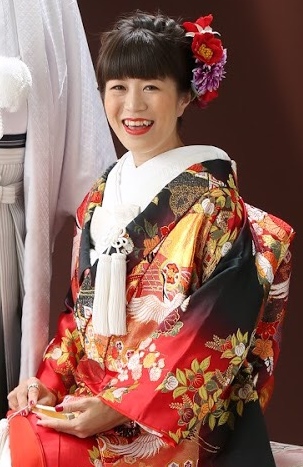
Haruka Kikuchi on her Wedding Day.
But you can hear her playing a 'Dogfight'
- see below.

If you are still having trouble grasping the idea, listen to this video which was put up on YouTube by my 'adopted grand-daughter' Haruka Kikuchi! You can hear the Dogfight (in this case a 12-bar Dogfight) from 1 minute 7 seconds to 1 minute 19 seconds, and again from 2 minutes 46 seconds to 2 minutes 59 seconds.

4 February 2015

Post 166: WHEN YOU TRIM THE 12-BAR BLUES

The standard, basic chord structure of a 12-bar blues (without any subtleties) is this:

I | I | I | I7 | IV | IV | I | I | V7 | V7 | I | I | 


Hundreds of tunes are based upon it.

But there are some curious variants that are arrived at by chopping out some part of the structure.

For example, lop off the first two bars and you have this:
 I | I7 | IV | IV | I | I | V7 | V7 | I | I | 

This is exactly what you get in the 10-bar tune Frisco Bound, composed in 1929 by Memphis Minnie and Kansas Joe.

Lop off the first four bars:
 IV | IV | I | I | V7 | V7 | I | I | 
... and you have the chord progression for The Girls Go Crazy (and many other tunes with 8-bar themes - such as the second part of Down By The Riverside).

Omit Bar 9 and you get:
I | I | I | I7 | IV | IV | I | I | V7 | I | I | 
...which is what you have with the possibly unique 11-bar blues that is Jackson Stomp, composed in 1930 by  Charlie McCoy and Walter Vincson.
Memphis Minnie
And here's a curiosity - the only 13-BAR blues I can think of. It occurs as the Interlude in Blind Boy Fuller's Untrue Blues. This is essentially an eight-bar tune, but he has two guitar links of 13 bars, which seemed to be based on the 12-bar blues, but with Bar 10 repeated. When Tuba Skinny revived this tune in 2014, they scrupulously followed the original and kept the 13-bar section.
==========
Footnote

The book Playing Traditional Jazz by Pops Coffee is available from Amazon.

Post 165: DOES A CELLO WEIGH MORE THAN A BANJO?

My good friend John Burns, who plays a cello in classical music groups and a banjo in traditional jazz bands, has kindly sent me the following.
---------------------------------------------------

I have been meaning for ages to add some further thoughts to your posting in your 'Making Music' Blog from more than 2 years ago about the lady cellist who appeared to carry her instrument and other equipment to her busking location by bicycle.


You made the comment that a cello is not as heavy as the “man in the street” might think, and I confirmed that soft cello bags frequently have straps to enable the instrument to be carried on the back – rather unwieldy when on a bike, but certainly possible. This set me pondering: well, what does a cello weigh? So here are some facts and figures:


My cello is a standard full-size instrument, measuring

4ft 1in long

1ft 5in wide and

10in deep, 4in of which constitutes the bridge.

So, quite big!

It weighs a mere 6lb.

I have (as most cellists do) a hard case for it which increases the dimensions by some 3-4in all round and which weighs more than twice the weight of the cello at 13lb giving a total of 19lb – not too bad when compared with the 20kilos allowed at the airport but still pretty heavy especially when its awkward bulk is taken into consideration, and when hanging from a strap over one shoulder as mine does!

But while we are on weights and measures, what about my banjos? Old banjos (two of my three date from the 1930s) are notoriously heavy. My plectrum banjos are fairly big instruments (NOT to be confused with the ukulele-banjo played by George Formby!)

They are some

3ft 1in long with a body of 1ft 1in diameter.

They weigh 9lb, half as heavy again than the cello. This does not seem a huge weight but almost all of it is concentrated in the circular body of the instrument so when being handled they give the impression of being very heavy. When playing standing up at a gig using a sling (I prefer to sit) it begins to put a considerable strain on the neck and shoulders after a while.

The cases for the banjos are the same weight as the banjos giving a combined weight of 18lb, similar to the cello + case but much less bulky.

My tenor banjo is some 3in shorter with the same size body, but it is a modern instrument weighing a mere 5lb!

And finally, I have a classical guitar (which I can’t play). It only weighs 4 lb!

So there you are, a lot of figures which can probably be put away in the “useless information” file, or, of course, deleted, but I hope you found them of some passing interest.
==============================
Thanks, John. My guess about the weight of the cello would have been far from correct.
==============================