28 April 2017

Post 501: CALL ME BACK, PAL O' MINE

The morning started with a run through the new additions to YouTube from some of our favourite video-makers.

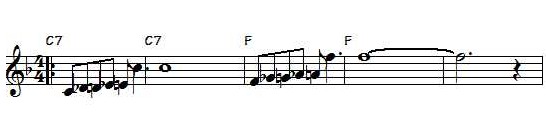
I soon had a very pleasant surprise. Louisiana-based RaoulDuke504 had filmed Maddy and Her Jazz Friends in the French Quarter on 27 April 2017, performing Call Me Back, Pal o' Mine. I do not think I had ever heard this song before, and certainly not played by a jazz band.
So it is yet another obscure tune from long ago. Maddy has a knack for unearthing really good ones. Remember Hold You Hand, Madam Khan, Baltimore and Buy Me a Zeppelin?

This tune, Call Me Back, Pal o' Mine, struck me as very pleasant indeed. It has a good melody and it feels as though it is based on familiar chord changes that should present no difficulty to jazzmen. So I hope very much that other bands will adopt it - with or without the vocal. You can watch Maddy's performance BY CLICKING HERE.

I immediately contacted that great benefactor of traditional jazz musicians the world over - Lasse Collin. He has made leadsheets for hundreds of tunes freely available to us on his website. I was so pleased that he also liked the tune and promised to produce a leadsheet for it without delay. A few hours later, he had completed the job, and he let me know that the result can be found at:
http://cjam.lassecollin.se/songs3/callmebackpalomine170428.html
Meanwhile, I had sought out the origin of the song and found that it was recorded in 1922, having been composed in 1921 by Harold Dixon, with words by Lawrence Perricone.

Maddy sings and plays it (in the key of Bb) in 4/4 time. But it seems it was composed as a WALTZ (as, indeed several of our 4/4 tunes originally were).

To hear a lovely but ancient piano roll recording of it (played in Ab) in lilting waltz time, CLICK HERE.

There is also an early Gennett waltz-tempo recording available BY CLICKING HERE.

In 1949, the song was recorded (this time in the key of F) by blues guitar legend Blind Willie McTell. You can hear it BY CLICKING HERE. My guess was that Maddy had probably learnt the song from this version; and indeed she has kindly confirmed this was so. In an email she kindly told me: 'Yes, I did learn it from the Blind Willie McTell recording which was on a compilation my dad listened to all the time when I was growing up.'

Conclusion: let's start playing this tune, with a big thank you to Maddy for reviving it, to Randy for filming it, and to Lasse for working out a leadsheet.

===================
Footnote:

Do not confuse this song with Dear Old Pal of Mine, composed during the First World War by Lieutenant Gitz Rice while he was serving in Belgium - though his song also went on to be famous at the time. If you seek it out on YouTube, you will find it is a quite different song from the one sung by Maddy.

25 April 2017

Post 500: SHAKE 'EM UP AT ABITA BUSKERS FESTIVAL 2017

On Sunday 23 April 2017 the annual Buskers Festival was held at Abita Springs, on the north side of Lake Pontchartrain. For those of you who don't know the area, it's about 45 miles north of New Orleans.

Six fine bands played for an hour each between midday and early evening. They included some of our favourites, such as The Hokum High Rollers, The Gentilly Stompers, the all-ladies Shake 'Em Up Jazz Band and Tuba Skinny

It was a glorious event; and the great news is that the New Orleans radio station WW0Z made excellent videos of the entire proceedings. 

Many of you have told me you have become big fans of the Shake 'Em Up Jazz Band. They gave a lovely performance in which, as usual, the ladies played some outstanding traditional jazz, while making it all look so relaxed and simple, which of course it isn't. Chloe by the way plays a Buffet E11 clarinet with a Vandoren M13 Lyre mouthpiece. The fluidity of some of her improvisations was mind-boggling; but the playing from the entire band was outstanding. And Molly was a power-house on guitar and also contributed vocals on Sweet Substitute and My Silent Love.

The programme included those old favourites The Onions (though surprisingly the audience did not seem aware that they were required to shout 'Onions' in all the breaks!) and Eh La Bas, with Marla singing the original creole patois. Dizzy's playing was spot-on as usual; and she was featured on Washboard Wiggles.


And Haruka was on her usual fine form.

Other highlights were Savoy Blues, Shake It and Break It and When You Wore a Tulip – one of several vocals delivered by Chloe.

It was so good to be able to watch Julie in close-up and admire what a fine string bass player she has become. She told me in 2016 (the only occasion when I have had the privilege of speaking with her) that she had not been playing the instrument for many months.

Yet now Julie is one of the best bass players on the New Orleans scene, accurate, rock-solid - a driving force.

I imagine this band rarely has the chance to get together to discuss repertoire and rehearse, so the slickness and teamwork are all the more impressive.

But enough from me. Watch the video for yourself. Go to:


There you will see (on the right of the page) that the entire Festival has been divided into four videos. To find Shake 'Em Up, click on the second from the top - the one that runs for 2 hours and 8 minutes. Slide the time bar to about 1 hour 9 minutes for the start of their performance.

Elsewhere in the four videos, you will be able to listen to all the other bands at the Festival, including Tuba Skinny playing such tunes as Pearl River Stomp, Cold Morning Shout, Bellamina, Fireworks, Kansas City Stomps and (for the first time on video?) Come On and Stomp Stomp Stomp.

---------------
FOOTNOTE
The book Enjoying Traditional Jazz by Pops Coffee is available from Amazon.

22 April 2017

Post 499: THE YOUNG KEEP THE MUSIC GOING!

There are plenty of wonderful young musicians around the globe who have discovered the musical styles and repertoire of a century ago and are playing traditional jazz with great skill and passion.

Recently two more groups have come to my attention. In Brazil, guitarist Cleber GuimarĂ£es has been developing his fine, swinging little band called Fizz Jazz, and you can watch a good example of their work - 'Sunday Swing' - a piece composed by Cleber himself - BY CLICKING HERE. The band seems to have a nucleus of four versatile musicians. Occasionally they are joined by two friends on keyboard and trumpet. Also the band has now issued its first recordings - available on Bandcamp at:
https://fizzjazz.bandcamp.com/album/live-at-the-studio

The other group is The Milk Crate Bandits, based in Vancouver, BC, Canada, and led by banjo-playing singer Jack Ray. You can easily find examples of their work on YouTube. Late in 2016 they travelled to New Orleans and, for a great acoustic, recorded several tunes in the building that was the former Luthjen's Dance Hall - and is today the Marigny Recording Studios. I understand that two EPs should be available from May 2017 onwards.

For an immediate example of what is going on in Japan, where there are many well-trained traditional jazz musicians, have a look at a video of Over The Waves played by young musicians in Tokyo:
https://www.youtube.com/watch?v=KBuXLwcnvvg
I constantly hear of new young bands setting up, (though sadly not as many as I would wish in my own country). There is The Stone Arch Jazz Band in Minneapolis, founded by the talented and tasteful clarinet-player Richard Lund. Have a look at their website: Click here to view. And note that the band has already made some stylish videos, such as this one: Click here to view.


The band called The Fat Babies, based in Chicago, are highly respected and I am told they play regularly at The Green Mill Bar in that City. You can find plenty of their videos on YouTube.

And The Dirty River Dixie Band, founded in Texas and playing a very energetic kind of dixieland music, was able to announce towards the end of 2016 that the average age of its members was under 25.
The situation in such countries as Australia, Germany, Canada, Spain, Italy and Denmark, as far as I can tell, gives some encouragement.

The Dizzy Birds Jazz Band in Berlin is terrific.

And correspondent Michael Meissner introduced me to Queen Porter Stomp in Sydney, Australia. Here they are, and you can easily find examples of this fine young band's work on YouTube:
Regular correspondent from Holland Robert Duis recommends looking at videos of Malo's Hot Five and Attila's Rollini Project; and my friend Anders Winnberg in Sweden has assured me there are plenty of good bands operating in his country, where the Gothenburg Jazz Festival is a major event. And Ray Andrew in Perth, Australia, has told me the traditional jazz scene is very strong in his city and that the young are being attracted to it. Even Finland - a country remote from New Orleans and with a population of well under six million - has the very pleasant Birger's Ragtime BandAlso in Finland there is a band called Doctor Jazz: it seems to me to be bright and recently formed; and several of the players are relatively young.

Regular reader Phil in the USA has recommended the Moscow-based young bands The Kickipickles and The Moscow Ragtime Band. You may find their work on YouTube.

And in Japan, especially, as I indicated above, traditional jazz seems to be going through a boom period. Some of the best in the world is being played in Tokyo. Seek out the performances on YouTube made by the video-maker codenamed ragtimecave.

So, we do not have to accept that traditional jazz is on the way out!

In St. Louis, Missouri, The Sidney Street Shakers play exactly the kind of jazz I like best - unpretentious, straightforward, exciting, with good teamwork and just right for dancers. And note elsewhere The California Feet Warmers - a fairly young band playing slick, well-prepared traditional jazz.

Elsewhere, you may find such good young bands as Magic Shook Heads and The Hippocampus Jass Gang in the south of France: their videos are worth watching. And in Buenos Aires, you have the Jazz Friends - a terrific, fluent band, whose range of instruments sometimes includes the 'pinkullo' - a South American flute.

In the North-Eastern corner of Italy we find the young Adovabadan Jazz Band of Treviso playing some very tasteful traditional jazz. For example, click here to see them performing Cake Walking Babies From Home.

In the Rhine-Neckar area of Germany, a newly-formed band of energetic and enthusiastic young musicians has shown what can be achieved even with a limited range of instruments. They call themselves Die Selbsthilfe-Gruppe (The Self-Help Group) and you can find examples of their work on YouTube.

All terrific stuff. So heart-warming; and giving great hope for the future.

Above all, I can tell you there is great old-time jazz being played by YOUNG people on the streets of New Orleans; and I believe the Internet is spreading their influence so rapidly that there will be yet another big revival of this kind of music.

There are over twenty traditional jazz bands playing professionally in New Orleans - more than at any previous time in jazz history.

To see what I mean, even if you can't get to New Orleans, try spending some time on YouTube. You will be amazed at the quality of the traditional jazz being produced by instrumentalists in their twenties and thirties; and there are plenty of singers of outstanding ability too.

I have written before about Tuba Skinny and The Shotgun Jazz Band - currently the best of all the groups. They are not only technically brilliant; they also take great care over arrangements and presentation of tunes, and they have been reviving great old melodies that were in danger of being forgotten. Have a good look and listen to their work. But here are some examples of other New Orleans bands you may care to investigate on YouTube:

Rhythm Wizards Jazz Band (CLICK HERE to sample their tasteful playing)
Loose Marbles
Little Big Horns
The Cottonmouth Kings
Smoking Time Jazz Band
Jessy Carolina and the Hot Mess
Jenavieve Cook and the Royal Street Winding Boys
Yes Ma'am String Band
The Gentilly Stompers
Hokum High Rollers
The Big Dixie Swingers
The Messy Cookers
The Sluetown Strutters
The Palmetto Bug Stompers
John Zarsky and the Trad Stars
The Jazz Vipers
The New Orleans Swamp Donkeys
Orleans 6 (led by the excellent Ben Polcer)

And even in Britain there is some hope.

The great Ewan Bleach, who spent several months in New Orleans playing regularly with Tuba Skinny and other bands, is involved in several enterprises. In particular, he leads The Cable Street Rag Band in the Limehouse area of London. Robin Rapuzzi recommends this band. He told me: 'I've had the honor of playing with them the last couple summers. Those guys are great. They can play everything from straight and narrow ragtime compositions to gorgeous waltzes and hot, hot dance numbers'. Try them for yourself: there are several videos on YouTube. 'Hot' they certainly are. (You should spot Robin himself guesting on washboard in one of the videos.)

And have a look at the videos of The Brownfield/Byrne Hot Six to discover some technically-brilliant swinging jazz being played by chaps who seem to be still in their twenties.

Also from Britain, seek out the videos of Adrian Cox, or Ben Cummings, or The Graham Hughes Sunshine Kings, or Giacomo Smith, or The Basin Street Brawlers. You will have a pleasant surprise.

am sure there must be many other such bands around the world. I would be pleased to receive more information.

19 April 2017

Post 498: 'OLE MISS RAG' PLAYED PROPERLY!

W. C. Handy's house in Memphis.
Friend and video-maker James Sterling filmed The Shotgun Jazz Band playing W. C. Handy's Ole Miss Rag at The Spotted Cat in New Orleans. It is a remarkable performance, not least because of the 'authentic' interpretation of this tune that Marla Dixon and her colleagues offer us.

Numerous tunes over the decades have become altered, simplified or corrupted, so that jazz bands playing the tunes today can offer various versions - and they are all accepted as 'correct'.

When we play Ole Miss Rag, we usually treat it as having just two simple themes. I am sure you know them. The first starts with these four bars:
This theme comprises 16 bars (played twice to make 32), though there is usually a 'tag' stretching them to 20 bars as they lead into the second theme, which is also played in F. Its first four bars are:


And bands stick on that second theme for their improvisations. That's all there is to it!

At least, that's how hundreds of bands play this piece, including (I admit) bands in which I have played.

But we are all WRONG! Marla and her team have given us a version that is faithful and authentic in sticking to what Handy wrote - and what he himself played. Listen to a wonderful historic recording of Handy's own band playing the piece in 1917:

Notice how it has a well-composed Introduction and also a substantial middle theme of 32 bars. We have dropped both of those features from our performances. What's more, it changes key from F to Bb for the final theme (correctly known as the 'Trio'). Today's bands have forgotten this key change.

Now watch and listen to The Shotgun's version:
Note how from 23 seconds until 1 minute 03 seconds the band is playing the middle section that the rest of us omit. And note how, for the final theme (the 'Trio') at 1 minute 23 seconds they correctly switch into the key of Bb, while the rest of us incorrectly stay in F.

In 'Comments' beneath the video, Shotgun member John Dixon has said All the credit to Twerk, James and Boeddinghaus for transcribing the original W. C. Handy version - what may best be described as the beautiful mess. There's so many little weird and anachronistic parts to the original that it's no wonder it's gone through changes.

This shows us what a lot of hard work is done behind the scenes in order for the top traditional jazz bands of today to be able to present us with performances such as this. The Shotgun Band included this tune in this 'correct' version on their CD (entitled Stepping on The Gas) early in 2017 and David Boeddinghaus is to be heard playing piano on that.

Well done, Shotgun. A lesson to us all.

Here's what Handy actually wrote.
Then comes the theme most bands have dropped.
And on the bottom half of the final page comes the 'second theme' we all know and play - though most of us fail the key change test.
By the way, the Ole Miss of the title was the train that used to run from Memphis to New Orleans.
It's just occurred to me that I enjoyed that very journey by rail on 18 October 2016, though Amtrak had some new rolling stock since Handy's time. Here we were - boarding the double-decker train at Memphis Station at 6am:

16 April 2017

Post 497: JOY FROM 'THE LOOSE MARBLES'

The most important and influential traditional jazz band to emerge anywhere in the world in the Twenty-First Century has undoubtedly been The Loose Marbles. This band was given its name by its founder, Michael Magro, who grew up in Philadelphia. Its first performance was in Providence, Rhode Island, way back in September 2000.

I have explained in the past why this band is so important in the history of our music. To read my article, CLICK HERE.

The good news is that Michael is still leading the band and setting an example to us all. A 26-minute video of Loose Marbles in one of its latest manifestations - as a six-piece - has recently appeared on YouTube; and I commend it to you.


There is nothing exhibitionist or pretentious in this music. Leading from the clarinet, Michael likes to play good, simply-structured, pretty tunes in a relaxed way, with the emphasis on melody and teamwork. He is often the first to state the melody, usually (as in Winin' Boy Blues) in a very interesting way. Michael's playing is reminiscent of his heroes George Lewis and Albert Burbank. And it is interesting to hear Marla playing one complete chorus with a double-section stonelined 'cleartone' mute. (I must remember to add one to my Christmas wish-list!) The three rhythm players are exemplary throughout, with their clockwork 4/4 support.

I hope you will enjoy this entertaining and sincere performance, filmed in Frenchmen Street, New Orleans, at The Louisiana Music Factory, which, in case you don't know, is a very large shop with a terrific stock of jazz recordings.

13 April 2017

Post 496: JAZZ CLUB ON ITS LAST LEGS?

Let me tell you about a visit I made recently to a jazz club here in England. It was interesting because it said a lot about the state of traditional jazz in the United Kingdom – and probably about the state of jazz in many countries.

The 'Club' itself was actually a sub-section of a Social Club which has existed for almost 40 years. It is housed in an impressive building. The hall used for entertainments is large and well equipped with tables and comfortable chairs. It has a decent full-width stage with a permanent and very good P.A. system. There is a bar selling drinks and light refreshments.

The club puts on a traditional jazz night once a month but I learned from posters that there were other kinds of entertainment (bingo and solo artists mainly) at other times.

On the night when I attended, the performing band was a well-known six-piece group from 40 miles away. It was hard-working and played two sets of an hour each, mixing classics from King Oliver, Armand Piron and Jabbo Smith with well-known standards and even a couple of comic numbers for light relief. Three members of the band provided vocals.

The performance began punctually at the advertised time - 8.30pm. It ended a few minutes after 11pm. 

The band's programme was efficiently prepared: there was hardly any delay between tunes. In all it played about 12 tunes in each set. 

The audience paid £7 each for admission (£6 for club members) and there was a raffle with a prize draw during the interval.

Talking with some members of the audience, I discovered they were serious traditional jazz lovers, genuinely interested and knowledgeable. 

So far, so good. But here are some points of concern.

The audience consisted of only 27 men and 22 women and it seemed to me that all of them were above the age of 65. In fact, most appeared to be closer to 80. There were a few couples but mostly they were people who arrived on their own. My guess is there were quite a few widows and widowers among them. I suppose the club provided an escape from loneliness. They could enjoy a drink and a chat with friends and listen to some gratifying music. 

And what about the band? The audience was told it was formed in 1986, and there had been changes of personnel with the passage of time. The musicians were in the same age group as the audience. One or two of them were probably over 80. 

I could not help wondering what the situation will be in 10 years from now. With no sign of young blood re-invigorating either the audience or the band, will such concerts be a thing of the past? 

I also noticed that by 10pm some in the audience had their eyes closed and their heads were drooping. It seemed to me that two or three might even have been asleep! This was in spite of the fact that the music was lively enough. Around 10.15pm, a few stood up, put on their coats and headed for home, even though the concert was scheduled to continue until 11pm. 

This particular club is in the middle of a built-up area and I noticed that most arrived on foot. Obviously they lived close by. Only a few came by car. Even so, the dozing and the early-departing people reminded me of a point I have often made before. I think it is much more sensible for such jazz clubs to hold concerts in lunch hours, when the elderly audiences and the musicians are not yet tired and much more willing to be out.

It is all very well for the Frenchmen Street clubs of New Orleans to be in full swing at midnight. But the situation is totally different there. The audiences are young, on holiday, and looking for a good time. The musicians, too, are young and accustomed to the nocturnal life-style.
Midnight on Frenchmen Street
But where jazz is provided in such venues as this one I recently went to in England, the audiences are elderly and the club is in effect providing a social service. I think it makes more sense to have lunchtime or afternoon concerts, with good hot meals on sale as well.

If the performance really must be in the evening, I think the start and finish times should be earlier. Elderly people would be happier starting at 7pm and ending by 10pm. For the musicians, too, tired at the end of the gig, this would reduce the amount of late-night travel.

10 April 2017

Post 495: THE SUN LANE LTD NEW ORLEANS BAND

The Sun Lane Ltd. New Orleans Jazz Band comprises seven pretty old boys based in Aaachen, Germany. Maybe you already know this band well. But for me they are a recent discovery - the result of a recommendation by one of my readers in Australia.

I have never seen the band in performance but there are good examples of their work on YouTube. I like them. The way they arrange their tunes is pretty much the same as in 95% of the bands operating all over Europe, Australasia and America - straightforward statements of the themes, followed by solo choruses until the out-chorus. But what I like particularly is the way they play tastefully and unpretentiously, with real delicacy and restraint (even in the rhythm section). The teamwork is good. After many years of working together, they have a very 'tight' sound. These chaps really listen to each other.

From its website, I learn this is a busy band, with plenty of bookings in Cologne. Also, surprisingly, The Sun Lane Ltd. New Orleans Jazz Band was founded as long ago as 1977, at The University of Aachen. Over the years, they have played at many festivals throughout Europe; and the band has been to New Orleans more than once - giving concerts there. Possibly the greatest moment came when they were booked to play the evening performance at Preservation Hall. That was on 30 April, 2002.

Not surprisingly, the band has built up a large repertoire and has made several CDs. You can buy them online.

In this video, watch them playing Bugle Boy MarchCLICK HERE. Note the exemplary drumming.

Or try My Little GirlCLICK HERE.

And here is Postman's LamentCLICK HERE.

There are other videos of the band on YouTube if you would care to hear more.

As ever, we have to be grateful to the video-makers who bring such fine things to our computer screens. In this case: thank you, Uli van Royen.

7 April 2017

Post 494: KEN COLYER

A few years after the Second World War, here in the UK and also in some other countries, the 'Trad Boom' began. Dozens of young men formed themselves into amateur bands and quite a few went on to have professional careers.

However, only ten years later the boom was over and not many fully professional bands were able to survive.

In England, a few of the band-leaders did well by making 'commercial' hit records. Think of Acker Bilk's Stranger on the Shore. The formula was to play a good, memorable, simple melody in a well-arranged manner, without exactly giving it a New Orleans Jazz style performance. Such records made it into the Top 10. In fact Stranger on the Shore, in which Acker Bilk is backed by the Leon Young String Chorale, was a No. 1 hit even in the U.S.A. Another example was Kenny Ball with Midnight in Moscow. Kenny and his trombonist Johnny Bennet in turn pumped out the haunting, minor-key 24-bar melody. It sold over a million copies.

However, of all those British bands, the one many consider the most important in terms of its place in the history of traditional jazz was that of the trumpet and cornet player Ken Colyer.


Much has been written about Ken's character, philosophy and life, so I will not go over all that again.

What matters is that he was admired for his integrity in sticking rigidly to what he considered authentic early-style New Orleans Jazz. He was not much interested in making recordings or in using his music to generate personal wealth.

It is sometimes said that he was quite a difficult musician to work with. I believe players occasionally left him because of a clash of philosophy or because they could not deliver in the way he wanted. He had his ideals and pursued them single-mindedly. Certainly, there were regular changes of personnel in the line-ups of his band over the few years during which they toured the clubs and played to enthusiastic fans who considered that Ken's was the only 'true' jazz.

Ken had a distinctive tone and he used vibrato very skilfully. But his playing was never showy or raucous, like that of so many jazz trumpeters. He stated the melodies in the decisive but delicate, uncomplicated manner much appreciated by clarinet players and trombonists whose job it is to add the decoration. And in ensembles, Ken provided pretty colouring phrases - always harmonically accurate. He believed great jazz needed great teamwork, so the emphasis was on ensemble playing, even though he happily employed some outstanding players who were very capable and creative soloists. Among them were Sammy Rimington, Monty Sunshine, Mac Duncan, Johnny Bastable, Ian Wheeler, Lonnie Donegan and Ray Foxley.

Sadly, Ken Colyer died in 1988 at the age of only 59. He had earlier suffered from stomach cancer.

In his day, it was not yet commonplace for videos to be made of almost every performance. So surviving videos of him playing, as far as I know, are only those filmed when he was growing weak and no longer had a band of his own. One such is this of Postman's Lament, where he sings and plays, but it is still a performance of considerable beauty:

However, Ken and his musicians did leave a number of sound recordings so we can still enjoy his music at its best. Try these three.

(1) Back in 1956, playing The Old Rugged Cross:

(2) From 1960, with Sammy Rimington on clarinet, Maryland, My Maryland:

(3) My favourite. This is a model for us all in how to lead and build up the excitement - Blame it On The Blues from 1956. Ian Wheeler, Mac Duncan and Johnny Bastable are in the band and the playing  is 100% ensemble throughout:
https://www.youtube.com/watch?v=A79yvcDRzIw
===================================
By the way, 'Enjoying Traditional Jazz' is my book for people who like LISTENING to the music. My other book - 'Playing Traditional Jazz' - is for those who PLAY instruments.
For more information, go to the Amazon website and type 'Enjoying Traditional Jazz' or 'Playing Traditional Jazz' into the Search Bar.

4 April 2017

Post 493: THE SECONDHAND STREET BAND

During my brief visit to New Orleans in February 2017, I came upon this band - new to me - called The Secondhand Street Band. They were playing in Royal Street, giving a spirited performance and displaying considerable technical skills.

Since I returned to England, I have found from the internet that they appear to have been formed in 2015 from musicians who migrated to New Orleans from Sweden, Hungary, France, the U.K, the Netherlands, California, Massachusetts, New York, and even a couple from Louisiana - all seeking to make a living by busking in New Orleans. There are plenty of YouTube videos of them, from which you may observe that they have a variety of possible line-ups and play music in a range of styles (one of which they call 'funky').

I was able to make videos of them performing Buddy Bolden's Blues (CLICK HERE TO WATCH IT) and Between the Devil and the Deep Blue Sea (CLICK HERE).

If you would like more information about the band, their website is:
http://www.secondhandstreetband.com/

Also, to sample some of their recordings, try:
https://secondhandstreetband.bandcamp.com/