Tuba Skinny recorded their eighth album - Tupelo Pine - in May 2017 and released it in August.

Using the eight musicians who were appearing regularly with the band at the time (but without Erika, who was absent), it offers music ranging from 1921 right up to tunes recently composed by three of the band members. Greg provides vocals, with one by Max.
The only tune to have appeared previously on one of their CDs is Call of the Freaks. On their earlier Garbage Man CD, it was played under its alternative title - Garbage Man, in fact. In this 2017 version, there are some 'freakish' inventions, especially from the clarinet, and we still have the vocal (Stick out your can....). But the arrangement is more elaborate, intricate, delicate, and polished than in the earlier version.
And that is exactly what will strike you about this album. Everything is so deftly executed. You have the impression that a great deal of preparation has gone into the arrangements. Backing rhythmic patterns are precise and well-rehearsed. All the little breaks are carefully worked out. A good illustration of this is the structure and use of two-bar breaks in Come On and Stomp, Stomp, Stomp, where the band precisely follows the famous recording made in 1927 by Johnny Dodds' Black Bottom Stompers. What stands out strongly compared with Tuba Skinny's earlier recordings is that everything is even more slick and polished.
As usual with Tuba Skinny, there is no exhibitionism. The emphasis is on good melodic music played with bags of intelligence and impeccable teamwork.
As usual with Tuba Skinny, there is no exhibitionism. The emphasis is on good melodic music played with bags of intelligence and impeccable teamwork.
Several of the tunes have become familiar through YouTube videos that appeared in 2016 and 2017. For example, the 1933 Clarence Williams composition Chocolate Avenue is yet another of those good old numbers the band unearthed. It is a gently swinging 32-bar tune in Eb; and the band passes the melody around in its usual fashion. To read the article I wrote when Tuba Skinny were first filmed playing Chocolate Avenue, CLICK HERE. And to watch a video I made of them playing this tune in New Orleans when I was there in February 2017, CLICK HERE. It is interesting to compare different performances. You will notice that the structure is remarkably similar, with the trombonist (in my video Charlie Halloran, but on the CD Barnabus Jones) leading the first sixteen bars of the Second Chorus and Craig on clarinet leading from the Middle Eight to the end of the Chorus. On the new recording, in the third Chorus Todd on sousaphone is given the dominant role in the first sixteen bars but the full ensemble rounds the piece off. So: three Choruses in all. However, in my video, you can see them playing four Choruses in total, with much prominence given to the three-man string section in the third.
And Clifford Hayes' romping Frog Hop from 1929 (at two and a half minutes the shortest piece in the album) is a real foot-tapper, with good little solos and a couple of amusing 'frog' effects.
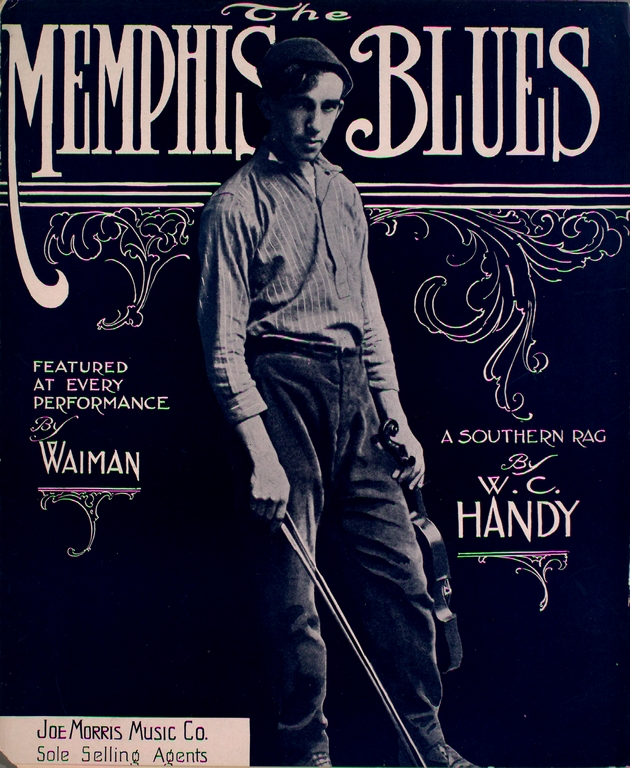
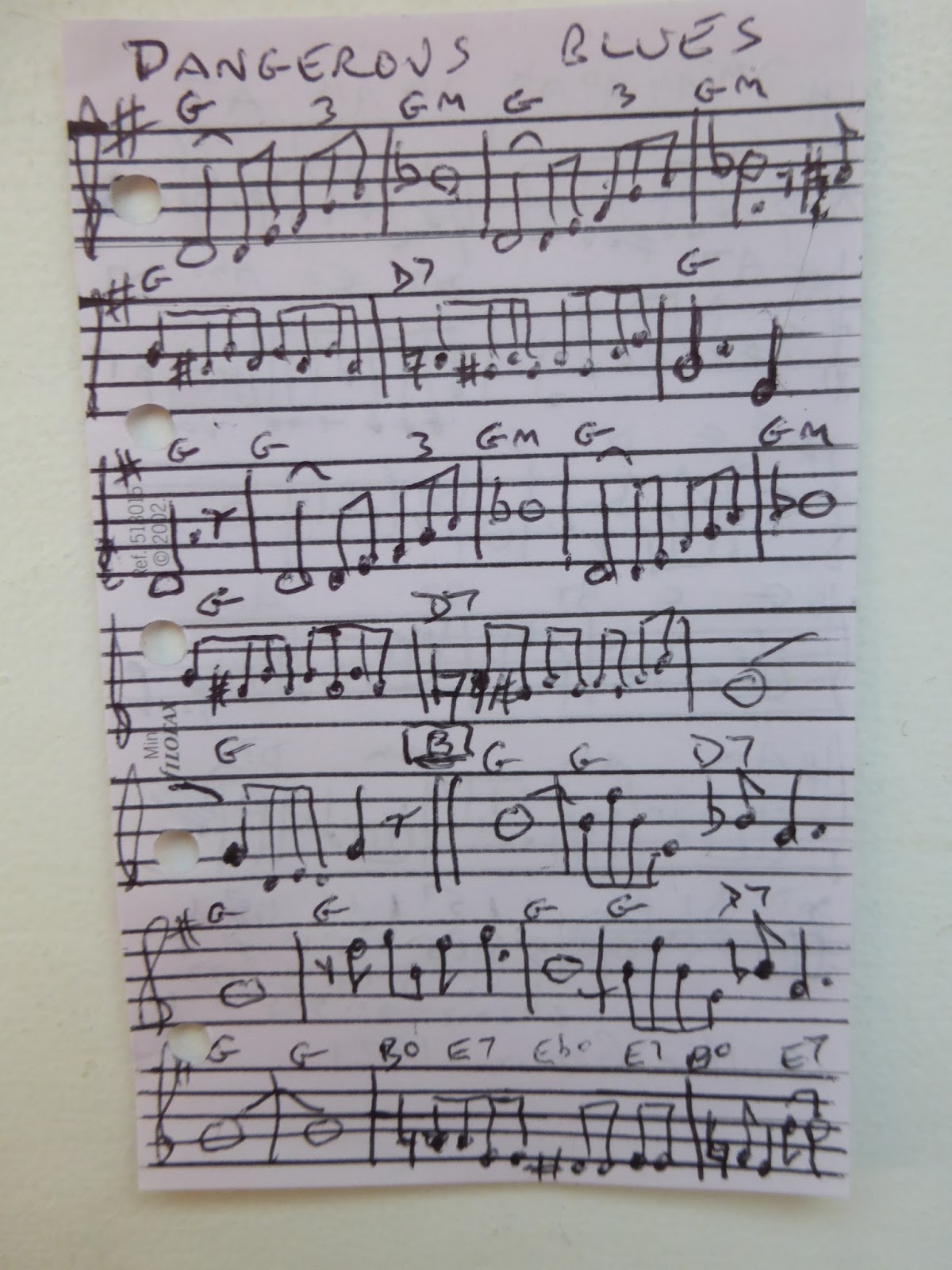
Dangerous Blues - the 1921 song with music by that tragically short-lived young lady Billie Browne - features Craig on clarinet and also has the usual collective vocal. You can read my article about this tune BY CLICKING HERE.
Come On and Stomp, Stomp, Stomp (composed in 1927 by Fats Waller et al.) is the trickiest and most complex piece in this album. Tuba Skinny's version is taken at a more leisurely pace than the one by Johnny Dodds, is fully arranged, complete with the key changes, and sets a great example to any band wishing to try this tune.
And Clifford Hayes' romping Frog Hop from 1929 (at two and a half minutes the shortest piece in the album) is a real foot-tapper, with good little solos and a couple of amusing 'frog' effects.
Dangerous Blues - the 1921 song with music by that tragically short-lived young lady Billie Browne - features Craig on clarinet and also has the usual collective vocal. You can read my article about this tune BY CLICKING HERE.
Come On and Stomp, Stomp, Stomp (composed in 1927 by Fats Waller et al.) is the trickiest and most complex piece in this album. Tuba Skinny's version is taken at a more leisurely pace than the one by Johnny Dodds, is fully arranged, complete with the key changes, and sets a great example to any band wishing to try this tune.
Shaye's composition Pearl River Stomp (2016) is a bouncy number with two sixteen-bar themes. In this performance the lead is passed around, the bass clarinet is strongly in evidence and there is even a 'twos' section shared by cornet and trombone. Almost imperceptibly, without any bridge, it slips into Db for the final two choruses (the second theme) after being entirely in Ab up to that point. This theme seems to be similar to the second theme of Bogalusa Strut, also using that tune's chord progression.
And Shaye's Nigel's Dream (from 2015) is another fine composition. With typical Shaye-isms, it slides neatly from C to Eb, back to C and then back to Eb to finish. It uses a thematic base reminiscent of the middle eight of East Coast Trot, and indeed the whole piece is something of a trot, played with great energy. Quite a dream our Nigel had!
I am glad the album also includes Thoughts, Robin Rapuzzi's gently rolling composition from 2015, in a lovely arrangement. I have written before about this tune. You may read my article BY CLICKING HERE. Robin originally composed it for violin but he is proud of the way it sounds when played by the band.
And Shaye's Nigel's Dream (from 2015) is another fine composition. With typical Shaye-isms, it slides neatly from C to Eb, back to C and then back to Eb to finish. It uses a thematic base reminiscent of the middle eight of East Coast Trot, and indeed the whole piece is something of a trot, played with great energy. Quite a dream our Nigel had!
I am glad the album also includes Thoughts, Robin Rapuzzi's gently rolling composition from 2015, in a lovely arrangement. I have written before about this tune. You may read my article BY CLICKING HERE. Robin originally composed it for violin but he is proud of the way it sounds when played by the band.
I'm Going to Germany (the 1929 number composed by Noah Lewis for Cannon's Jug Stompers) is a 16-bar song with a wistful melody, well presented by Greg, with good support from the band.
Greg also sings Loose Like That - one of those bright 8-bar tunes from which Tuba Skinny always manages to extract so much. It gets the album off to a fine start. (There is a YouTube video of them playing this song at the Abita Springs Buskers' Festival in April 2017.) In contrast, he also sings the 1930 Broonzy number Eagle Riding Papa, which is a brisk 32-bar tune.
Greg also sings Loose Like That - one of those bright 8-bar tunes from which Tuba Skinny always manages to extract so much. It gets the album off to a fine start. (There is a YouTube video of them playing this song at the Abita Springs Buskers' Festival in April 2017.) In contrast, he also sings the 1930 Broonzy number Eagle Riding Papa, which is a brisk 32-bar tune.
Max is the singer on Right or Wrong, the pleasant love song composed in 1921 by Arthur Sizemore and Paul Biese, with words by Haven Gillespie.

Some have already said that the elegiac minor-key Deep Bayou Moan is the loveliest melody Shaye has ever written. She herself leads it off, and it is then played beautifully by all members of the band. You may well consider this track alone justifies the price of the album.
The eponymous Tupelo Pine, composed by Barnabus (maybe inspired by the band's canine musical director!), is a slow, lovely melody in Eb over a simple chord progression (plenty of Ebs, C7ths and Abs). As with all the other tunes, it provides opportunities for a variety of instruments to take the lead.
You can download the album, or individual tracks, from Bandcamp: CLICK HERE.
The eponymous Tupelo Pine, composed by Barnabus (maybe inspired by the band's canine musical director!), is a slow, lovely melody in Eb over a simple chord progression (plenty of Ebs, C7ths and Abs). As with all the other tunes, it provides opportunities for a variety of instruments to take the lead.
You can download the album, or individual tracks, from Bandcamp: CLICK HERE.