A reader asked me to explain the type-names we come across in traditional jazz tune titles. 'What is the difference between a Drag and a Rag?' he asked. 'What exactly is a Stomp? How do you define Blues?'
 Little did he know I am just as confused about these matters as he is. There is plenty to read on the subjects, both in books and on the internet; but agreed definitions are not easy to come by.
Worst of all is trying to define Blues. In the 1940s, the first 'Blues' I became aware of were the songs of Bessie Smith and her contemporaries. There were tunes such as Backwater Blues and Blue Spirit Blues. I was led to believe the Blues were mournful songs, expressing suffering or regrets, or at least wistfulness and nostalgia. The books I read suggested they had arisen from the chanting of African slaves and were structured on a familiar twelve-bar chord pattern (three four-bar blocks). They used a scale in which flattened thirds, fifths and sevenths were common.
But just think of the heritage of tunes with 'Blues' in the title today.
There are songs called 'Blues' that are really just run-of-the-mill pop music of ninety years ago (normally 32-bar structures). Think of Beer Garden Blues (a conventional 32 bars in AABA structure). Think of Tishomingo Blues, Sugar Blues (this one actually an 18-bar, including tag), Bye Bye Blues, Wild Man Blues, Rent Party Blues, and Davenport Blues.
When professional composers got to work on writing 'Blues', their inventiveness took them far beyond creating one mournful melody of 12 bars. You find Yellow Dog Blues, Savoy Blues, Riverside Blues, Perdido Street Blues, Royal Garden Blues, Jackass Blues, Aunt Hagar's Blues, Dippermouth Blues, Livery Stables Blues, Beale Street Blues, Canal Street Blues, St. Louis Blues, West End Blues, Tin Roof Blues, Chimes Blues - all having two or more (often very cheerful) 12-bar themes and in some cases further structuring, such as 'bridge' passages and key changes.
 The early classic Crazy Blues has a long, continuous vocal that runs through three themes. Only the middle one comprises 12 bars; but you would hardly be aware of it.
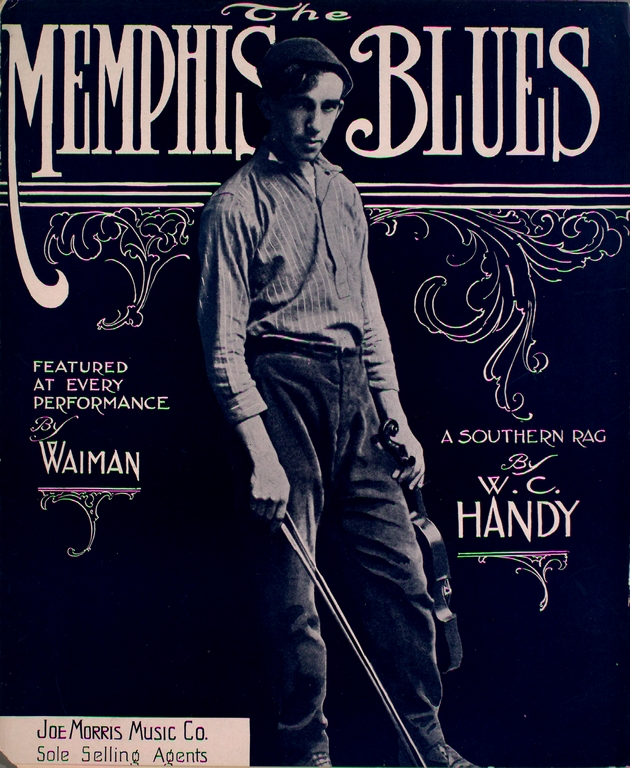
There are tunes with a 12-bar theme but also a substantial and memorable verse that is played before it. Think of Memphis Blues.
 There are plenty of 'Blues' that are lovely wistful compositions that do not include a 12-bar theme at all - Basin Street Blues, Melancholy Blues, Wabash Blues, Michigander Blues, Owl Call Blues, Winin' Boy Blues, Faraway Blues, for example.
Some tunes called 'Blues' have no 12-bar theme and nothing 'bluesy' about them, but are simply well-structured fun numbers. Think of Wolverine Blues, Blue Grass Blues, Dangerous Blues and Jazz Me Blues.
 Sometimes the 12-bar blues structure turns up in unlikely places. For example, Mahogany Hall Stomp (yes - it's called a stomp) has a simple main second theme of 12 bars on which the musicians improvise. The same thing happens in She's Crying For Me, Copenhagen, and especially in The Chant, which sounds like a very tricky piece, even though there is a simple 12-bar section tucked away within it as a basis for improvisations.
And what about Tom Cat Blues? It actually sounds like the 12-bar song Nobody Knows The Way I Feel This Morning leading (usually with a change of key) into the 16-bar Winin' Boy Blues.
And consider Weary Blues. Band-leaders often tell you it is not a blues and it is certainly not weary. In fact the first two themes are 12-bar structures, though they whip along in such a way that you would hardly notice. Then, with a change of key, you are into the pulsating familiar 16-bar theme on which sparkling improvisations are possible.
So: what kind of tune may be called a 'Blues'? As John Gore, my favourite school-teacher, used to say to us pupils in his Latin class 70 years ago: 'Tot homines, quot sententiae' [There are as many opinions as there are people]. He was quoting Terence, the Roman dramatist who lived 22 centuries ago.

Worst of all is trying to define Blues. In the 1940s, the first 'Blues' I became aware of were the songs of Bessie Smith and her contemporaries. There were tunes such as Backwater Blues and Blue Spirit Blues. I was led to believe the Blues were mournful songs, expressing suffering or regrets, or at least wistfulness and nostalgia. The books I read suggested they had arisen from the chanting of African slaves and were structured on a familiar twelve-bar chord pattern (three four-bar blocks). They used a scale in which flattened thirds, fifths and sevenths were common.
But just think of the heritage of tunes with 'Blues' in the title today.
There are songs called 'Blues' that are really just run-of-the-mill pop music of ninety years ago (normally 32-bar structures). Think of Beer Garden Blues (a conventional 32 bars in AABA structure). Think of Tishomingo Blues, Sugar Blues (this one actually an 18-bar, including tag), Bye Bye Blues, Wild Man Blues, Rent Party Blues, and Davenport Blues.
When professional composers got to work on writing 'Blues', their inventiveness took them far beyond creating one mournful melody of 12 bars. You find Yellow Dog Blues, Savoy Blues, Riverside Blues, Perdido Street Blues, Royal Garden Blues, Jackass Blues, Aunt Hagar's Blues, Dippermouth Blues, Livery Stables Blues, Beale Street Blues, Canal Street Blues, St. Louis Blues, West End Blues, Tin Roof Blues, Chimes Blues - all having two or more (often very cheerful) 12-bar themes and in some cases further structuring, such as 'bridge' passages and key changes.

There are tunes with a 12-bar theme but also a substantial and memorable verse that is played before it. Think of Memphis Blues.
Some tunes called 'Blues' have no 12-bar theme and nothing 'bluesy' about them, but are simply well-structured fun numbers. Think of Wolverine Blues, Blue Grass Blues, Dangerous Blues and Jazz Me Blues.

And what about Tom Cat Blues? It actually sounds like the 12-bar song Nobody Knows The Way I Feel This Morning leading (usually with a change of key) into the 16-bar Winin' Boy Blues.
And consider Weary Blues. Band-leaders often tell you it is not a blues and it is certainly not weary. In fact the first two themes are 12-bar structures, though they whip along in such a way that you would hardly notice. Then, with a change of key, you are into the pulsating familiar 16-bar theme on which sparkling improvisations are possible.
So: what kind of tune may be called a 'Blues'? As John Gore, my favourite school-teacher, used to say to us pupils in his Latin class 70 years ago: 'Tot homines, quot sententiae' [There are as many opinions as there are people]. He was quoting Terence, the Roman dramatist who lived 22 centuries ago.


